There is perhaps no transit in Vedic astrology that generates more anxiety than Sade Sati. Mention it at a family gathering and someone will lower their voice. Search for it online and you will find page after page of warnings, dooms, and expensive remedies promising protection. Before we go any further, let us be honest: much of that fear is manufactured, and most of what you have heard about Sade Sati deserves a second, calmer look.
This is an attempt to give you that second look — the tradition as it actually stands, the astronomical mechanics, and a grounded way to think about this period whether you are in it now, approaching it, or simply curious.
What Sade Sati Actually Is
Sade Sati — literally "seven and a half" in Hindi — refers to the approximately 7.5-year period during which Saturn transits through three consecutive signs: the sign immediately before your natal Moon sign (rashi), the sign of your Moon itself, and the sign immediately after it.
In Vedic astrology, the Moon sign is the foundation of the natal chart. It represents the mind, emotional body, and life circumstance. Saturn's slow, deliberate passage across these three sensitive points — the 12th, 1st, and 2nd houses counted from the natal Moon — is tracked carefully in the Jyotish tradition.
Saturn spends roughly 2.5 years in each sign. Three signs, 2.5 years each: seven and a half years total. You can check your current Sade Sati status using an accurate birth time, since the Moon moves quickly and precision matters.
It is worth being clear about what this is at its foundation: a gochar, or transit. It is an astronomical calculation based on Saturn's position in the sky relative to your natal Moon. Whether and how you experience it is a different matter entirely — one shaped by the rest of your chart, your life circumstances, and frankly, a great deal of individual variation.
Talk to an astrologer about your Sade Sati. First message free · ₹25/min
The Three Phases
Traditional Jyotish divides Sade Sati into three distinct 2.5-year legs, each with its own archetypal flavour.
Phase One: The Rising (Saturn in the 12th from the Moon)
The first phase is often associated with internal stirring — a sense that something is ending or pulling away. Themes classically linked to this phase include increased introspection, sleep or rest disturbances, spending or loss of resources, and a feeling that old certainties are becoming less reliable. Some people find they withdraw socially or begin questioning what they have taken for granted. Traditionally this phase is considered a time of letting go, whether or not the person chooses that consciously.
Phase Two: The Peak (Saturn over the natal Moon sign)
The middle leg, when Saturn sits directly on the natal Moon, is considered the most intense by most classical authors. The Moon governs the mind, and Saturn governs structure, delay, and reality-testing. When they meet, the tradition suggests that life tends to ask for accountability — in relationships, career, health, or simply one's own emotional patterns. This phase is also associated with increased responsibility, hard work with uncertain reward, and a kind of stripping away of what is not truly necessary. It can feel heavy. It can also produce a remarkable steadiness in people who lean into it.
Phase Three: The Setting (Saturn in the 2nd from the Moon)
The third phase is often described as the period of rebuilding — but slowly, on firmer ground. Saturn in the 2nd from Moon touches speech, family, finances, and accumulated resources. There can be financial caution during this leg, or careful restructuring of what one says and how one communicates. For many people, this phase, though still demanding, carries a sense of forward motion that the first two do not.
The Dhaiya: Saturn's Smaller Transits
Related to Sade Sati but distinct from it is the dhaiya — also called the small panoti or ashtama shani in its most commonly discussed form. This refers to Saturn's transit through the 4th and 8th houses from the natal Moon, each of which lasts around 2.5 years but is not part of the continuous Sade Sati cycle.
The 8th-house transit (ashtama shani) is particularly noted in tradition and is sometimes considered more immediately disruptive than parts of Sade Sati itself, particularly around themes of sudden change, health, and hidden matters. The 4th-house transit (ardha ashtama or the "half panoti") touches home, mother, emotional security, and inner peace.
Knowing where Saturn sits in relation to your natal Moon at any given moment — including whether you are in a dhaiya — is useful context, not a verdict.
A Different Frame: Maturation, Not Punishment
Here is what the classical texts actually say when you read them carefully: Saturn is a karaka for discipline, time, truth-telling, and the kind of wisdom that only comes from sustained effort. When Saturn transits a sensitive point in the chart, the tradition understands this as Saturn teaching — not Saturn punishing.
The Jyotish understanding of Sade Sati is better read as a long arc of maturation than as a string of catastrophes. Across 7.5 years, life tends to demand that you take responsibility for things you may have been deferring: financial habits, emotional patterns, relationships that have outgrown their form, work that is not aligned with your genuine capacities. Saturn is the planet of reality, and during Sade Sati, reality tends to be insistent.
This framing has parallels in other traditions. In Western astrology, the idea of the Saturn return — Saturn completing its 29-year cycle back to its natal position — carries a very similar energy: a confrontation with what is real, durable, and earned. Different astronomical event, same archetypal quality.
None of this means Sade Sati is easy. For some people it coincides with genuinely difficult periods. But correlation and causation are not the same thing, and the tradition itself has always held that Saturn, while demanding, is ultimately just. The Sanskrit name Shani comes from a root meaning "moving slowly" — and slow, steady reckoning is very different from punishment.
"Saturn does not take what you deserve to keep. It tests what you have built to see if it will hold."
A Note on Fear-Driven Remedies
We want to be direct here because this matters: the Sade Sati anxiety industry is real, and it causes genuine harm.
People are sold expensive rituals, gemstones, special pujas, and "guaranteed" planetary protection packages, often by platforms or practitioners who are counting on fear to drive purchases. We do not sell remedies. We do not believe any person, platform, or service can guarantee protection from the effects of a planetary transit. Anyone who does is not being honest with you.
This post — and our Sade Sati calculator — exists to give you accurate information and a calm frame. What you do with that information is yours to decide. If traditional practices like Saturn-related pujas, charitable giving on Saturdays, or simple disciplines like early waking are meaningful to you within your tradition and community, that is entirely valid. But those practices are worth doing from a place of intention, not from fear.
Do not make large financial decisions — buying an expensive gemstone, taking on debt for a remedy, making major life pivots — out of fear of a transit.
Living Through Sade Sati: What Actually Helps
The honest answer is: the same things that help with any sustained difficult period in life.
- Routine. Saturn responds well to structure. Regular sleep, consistent work, showing up when it is inconvenient — these are Saturnine virtues that tend to stabilise the period.
- Patience with slow returns. Sade Sati is not a sprint. Efforts made during this period often do not pay off until after it ends. This is frustrating. It is also just how sustained effort often works.
- Pruning rather than clinging. The phase where things fall away is also a phase of clarification. What remains after the pruning often turns out to be the more essential thing.
- Physical discipline. Exercise, consistent sleep, reduced excess — the body tends to be more sensitive during this transit, and basic maintenance pays dividends.
- Honest self-accounting. Sade Sati tends to surface what has been avoided. This can be uncomfortable. It can also be a genuine opportunity, particularly if you have a trusted person — a friend, counsellor, or thoughtful astrologer — to think things through with.
If you want to explore your chart in relation to Saturn's current position, finding your Moon sign in your kundli is the starting point. From there, the Sade Sati tool will show you exactly where Saturn stands relative to your Moon, which phase you are in if applicable, and when transitions occur.
Sade Sati Is a Season, Not a Sentence
Seven and a half years is long. It is also not forever. Every person alive has been through at least one full Sade Sati, or will be. In a typical lifespan, most people experience two to three full cycles. This is not a rare affliction — it is part of the rhythm of a human life viewed through a Vedic lens.
The traditions that developed Jyotish over centuries were not naive about suffering. They were also not interested in producing permanent dread. Sade Sati was understood as a season — demanding, formative, and ultimately generative for those willing to meet it honestly.
If you are currently in yours, or heading into one, the most useful thing we can offer is this: you are not uniquely cursed, your chart is not broken, and the astrologers who have walked through their own Sade Sati know that something genuine can be built in the fire of it.
Want to know if you are currently in Sade Sati, the dhaiya, or neither? Check your Sade Sati status with an accurate birth time for a precise reading. If you would like to talk through what it means for your specific chart, our community of Jyotish astrologers are available for calm, honest consultations — no fear-selling, no guaranteed remedies, just considered astrological guidance.
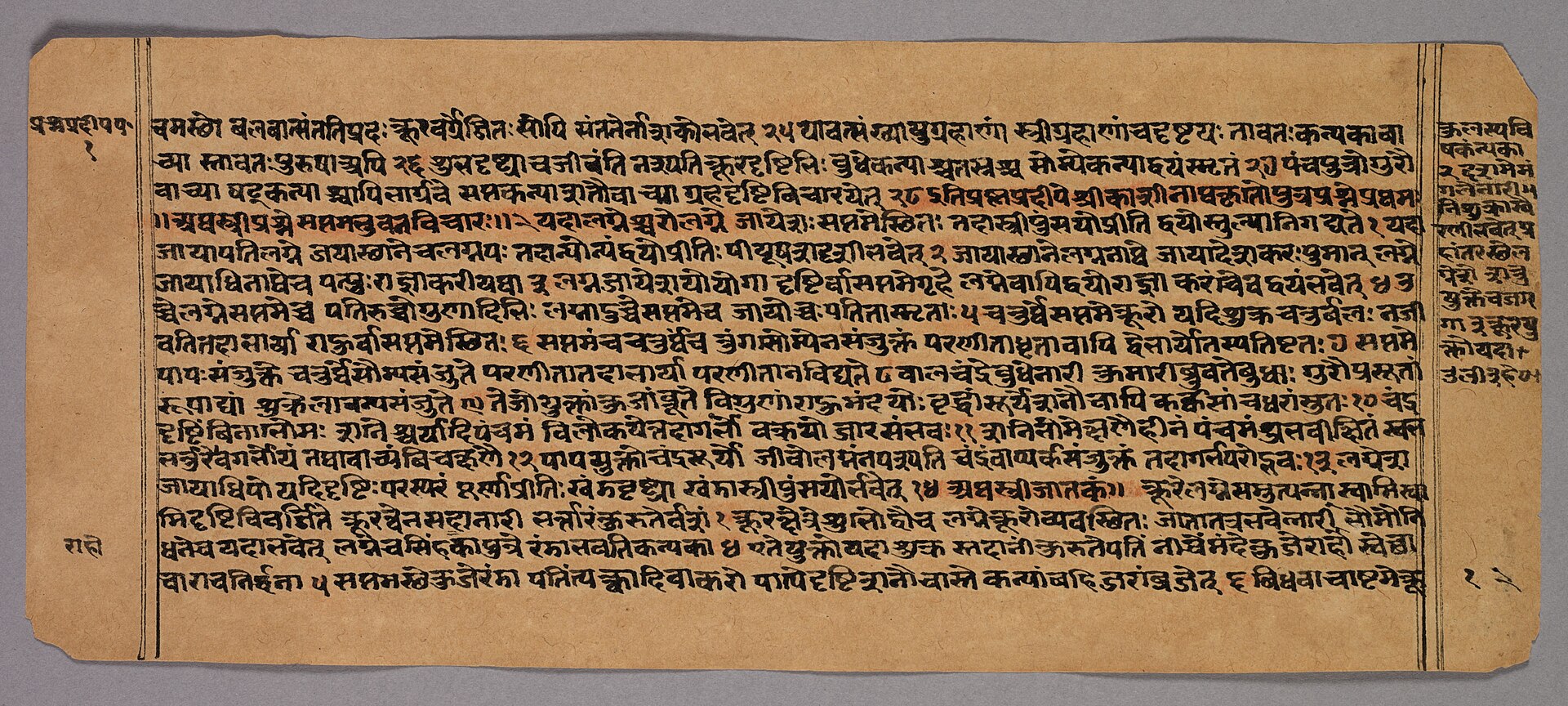
Images: Dr. John Murray (Public domain) via Wikimedia Commons.
 Astrologger