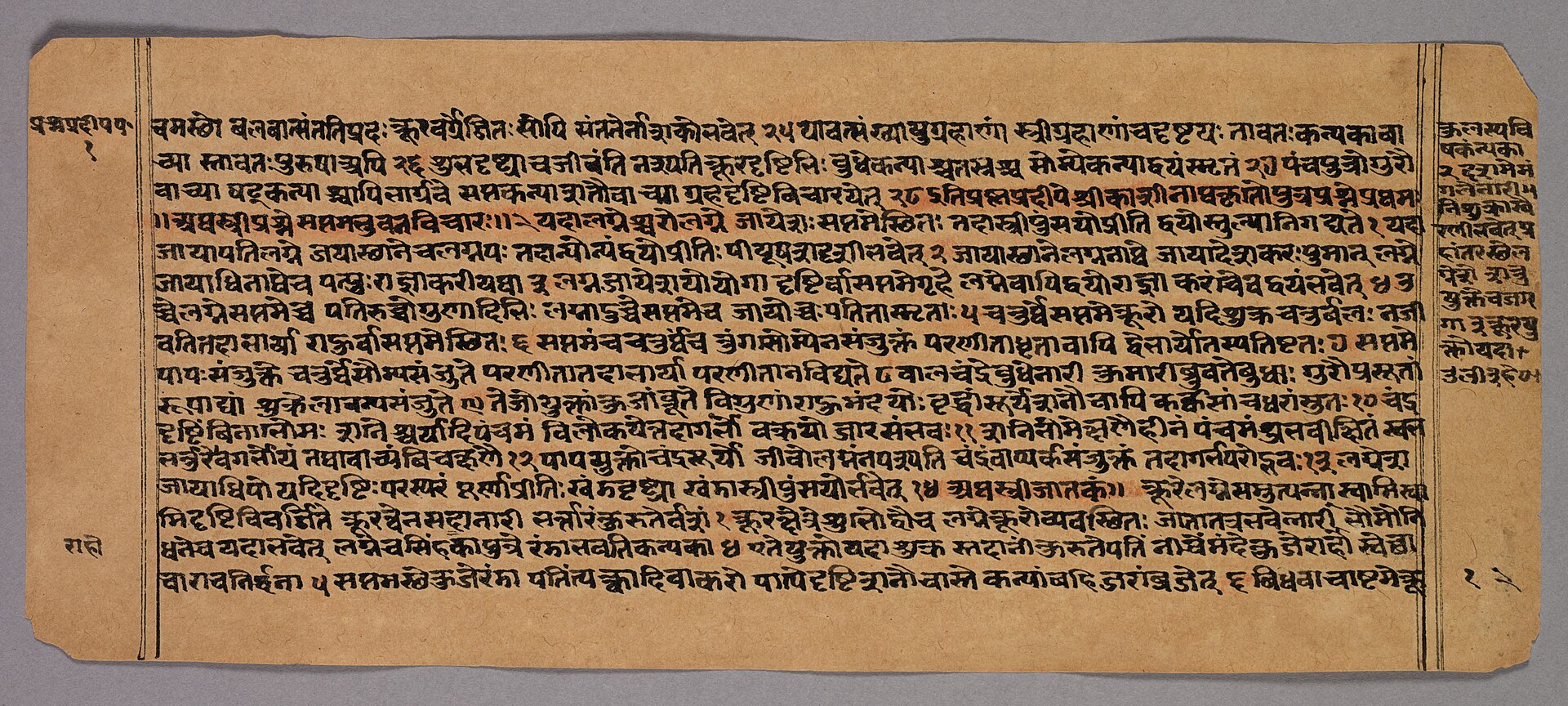
When families begin talking about marriage, one of the first things a Vedic astrologer does is sit down with two kundlis and run a Guna Milan. The process is centuries old, encoded in classical texts like the Muhurta Chintamani, and still the most-used compatibility framework across India today. Understanding what the numbers actually measure — and what they cannot — helps couples approach the result with clear eyes and steady hearts.
What Is Guna Milan and Why Does It Use 36 Gunas?
Guna Milan, also called Ashtakoot Milan, is a system that compares a bride's and groom's Moon signs and nakshatras across eight dimensions called kootas. Each koota is awarded a maximum number of points, and together they add up to 36 gunas. The word guna here means quality or merit, not the three gunas of Samkhya philosophy. Think of it as a compatibility scorecard built around the Moon, which in Vedic astrology governs the mind, emotions, and the rhythm of daily life — the terrain a married couple shares most intimately.
The Moon's nakshatra at birth is the seed of the entire calculation. This is why even two people with the same Sun sign can receive very different Guna Milan results: the Moon shifts nakshatra roughly every two and a half days, making it far more individually specific than the Sun.
You can check your Guna Milan score in minutes once you have both birth details — date, time, and place.
Talk to an astrologer about your compatibility. First message free · ₹25/min
The Eight Kootas: What Each One Measures
Varna — 1 point
Varna classifies each nakshatra into one of four social/spiritual categories: Brahmin, Kshatriya, Vaishya, or Shudra. The groom's Varna should be equal to or higher than the bride's. It is the smallest koota but reflects broad alignment in values and spiritual orientation.
Vashya — 2 points
Vashya means dominance or magnetic pull. The twelve signs are grouped into five temperament types (human, wild animal, small animal, water dweller, insects), and points are awarded based on how naturally each person's sign influences or is drawn to the other. It speaks to the informal power dynamics in a relationship.
Tara — 3 points
Tara counts the number of nakshatras between the two birth nakshatras and checks whether the result falls in an auspicious cycle. It is linked to health, longevity, and the general fortune the couple creates together. An unfavourable Tara is not alarming on its own — astrologers treat it as one signal among many.
Yoni — 4 points
Each of the 27 nakshatras is assigned an animal symbol — horse, elephant, sheep, serpent, and so on. Yoni compatibility looks at whether those animals are friendly, neutral, or hostile. It is traditionally associated with physical intimacy and biological compatibility. Full points require a friendly or identical Yoni pair; partial points are awarded for neutral pairings.
Graha Maitri — 5 points
This koota compares the lords of the two Moon signs. If those planets are friends in the classical planetary friendship table, full marks are given; enemies yield zero. Graha Maitri reflects intellectual rapport, mental wavelength, and the ease with which the couple communicates over decades.
Gana — 6 points
Every nakshatra belongs to one of three ganas: Deva (divine), Manushya (human), or Rakshasa (demonic). These are temperament categories, not moral judgements — a Rakshasa gana person is independent and intense, not evil. Same-gana pairs receive full points; certain cross-gana combinations are considered challenging, though astrologers regularly work with these.
Bhakoot — 7 points
Bhakoot compares the relative positions of the two Moon signs on the zodiac wheel. Certain intervals — notably the 6/8 and 9/5 relationships — are flagged as Bhakoot dosha and score zero. These combinations have traditionally been associated with financial strain or health challenges in the family. However, as discussed below, Bhakoot dosha has specific cancellation conditions.
Nadi — 8 points
Nadi is the highest-weighted koota and divides the 27 nakshatras into three channels: Adi (beginning), Madhya (middle), and Antya (end). Matching Nadi — both partners sharing the same channel — is called Nadi dosha and scores zero. Classical texts link it to reduced fertility or health concerns. Like Bhakoot, it has recognised cancellation rules that trained astrologers evaluate carefully.
What Do the Score Ranges Mean?
The traditional interpretation of the 36-point total runs roughly as follows:
- Below 18: Considered inauspicious in classical tradition; astrologers typically advise more thorough chart examination before proceeding.
- 18–24: Acceptable; often described as an average match with workable compatibility.
- 24–32: Good compatibility; this range covers most successful arranged marriages.
- 32–36: Excellent match by Guna Milan standards; relatively rare.
Treat these bands as traditional guidelines, not scientific thresholds. A score of 17 between two people with deeply compatible charts, shared values, and mutual respect tells a very different story than the number alone suggests.
The 18/36 minimum is a convention that has been repeated across generations, but experienced astrologers in every era have married couples below it when the rest of the chart supported the union. The score is a starting point for the conversation, not a finish line.
Bhakoot and Nadi Dosha: How Serious Are They?
Because Bhakoot (7 points) and Nadi (8 points) together represent more than a third of the total score, a dosha in either one can drag a couple below the 18-point threshold even if they score well on every other koota. This causes unnecessary panic.
Both doshas have classical cancellation conditions. For Nadi dosha, the dosha is typically considered cancelled if:
- The two partners share the same Moon sign (Rashi) but different nakshatras within it.
- The Moon signs are the same and the nakshatra lords are the same, but the padas (quarters) differ.
- The chart otherwise shows strong Lagna or Venus compatibility.
For Bhakoot dosha, cancellation is recognised when the lords of the two Rashis are mutual friends, or when the Navamsha (D9 chart) shows harmonious placements.
The key point is this: dosha identification is automated; dosha evaluation requires a trained eye. A reputable astrologer will never recommend breaking off a relationship solely on the basis of one or two doshas without examining the full picture. If your kundli matching result flags a dosha, treat it as a prompt to look deeper, not a verdict.
A Note on Manglik Dosha
Mangal (Mars) dosha, or Manglik dosha, is a separate consideration from Guna Milan. It arises when Mars occupies certain houses in the birth chart — classically the 1st, 4th, 7th, 8th, or 12th — and is traditionally associated with tension or turbulence in marriage. You can check Manglik status with a birth chart tool.
Like Nadi and Bhakoot, Manglik dosha has a well-documented list of cancellations. Many astrologers note that a significant portion of the population is technically Manglik, which has softened the alarm around the designation over time. The most common modern approach is to match a Manglik bride with a Manglik groom, or to look for cancelling placements before drawing any conclusion.
The important thing to know: being Manglik is not a life sentence of difficult marriages. It is a placement that calls for a more careful reading of the seventh and eighth houses, nothing more.
The Score Is a Starting Point, Not a Verdict
Guna Milan was designed as a decision-support tool for an era when families arranging a marriage had limited time and information. It gave them a structured way to surface potential incompatibilities quickly. That purpose is honourable, and the system contains real wisdom about psychological and biological compatibility.
What it does not — and cannot — do is account for emotional maturity, communication skills, shared life goals, financial alignment, family dynamics, or the thousand small kindnesses that hold a marriage together. Two charts can score 30/36 and belong to people who have nothing to talk about. Two charts can score 16/36 and belong to people who have built a decades-long partnership of genuine warmth.
Our compatibility tool and Guna Milan scoring are computed and AI-assisted. They apply the classical rules accurately, but they cannot replicate the judgement of an astrologer who reads your full chart — the Lagna, the seventh house lord, Venus, the Navamsha, the Dasha periods. If your result raises questions or concerns, the most useful next step is to speak with an astrologer about your match rather than sitting with the number in isolation.
A low score is not a reason to end a relationship you believe in. A high score is not a guarantee of a happy one. Vedic astrology at its best is a tradition of inquiry, not prediction — it asks good questions and opens conversations that might not have happened otherwise.
Ready to Run Your Match?
If you have both birth details to hand, check your Guna Milan score now and read through the koota breakdown. Then, if you want to understand what the results mean for your specific charts, connect with one of our astrologers for a personalised reading. A number is the beginning of the story, not the end.
Images: Ms Sarah Welch (CC BY-SA 4.0) via Wikimedia Commons.
 Astrologger