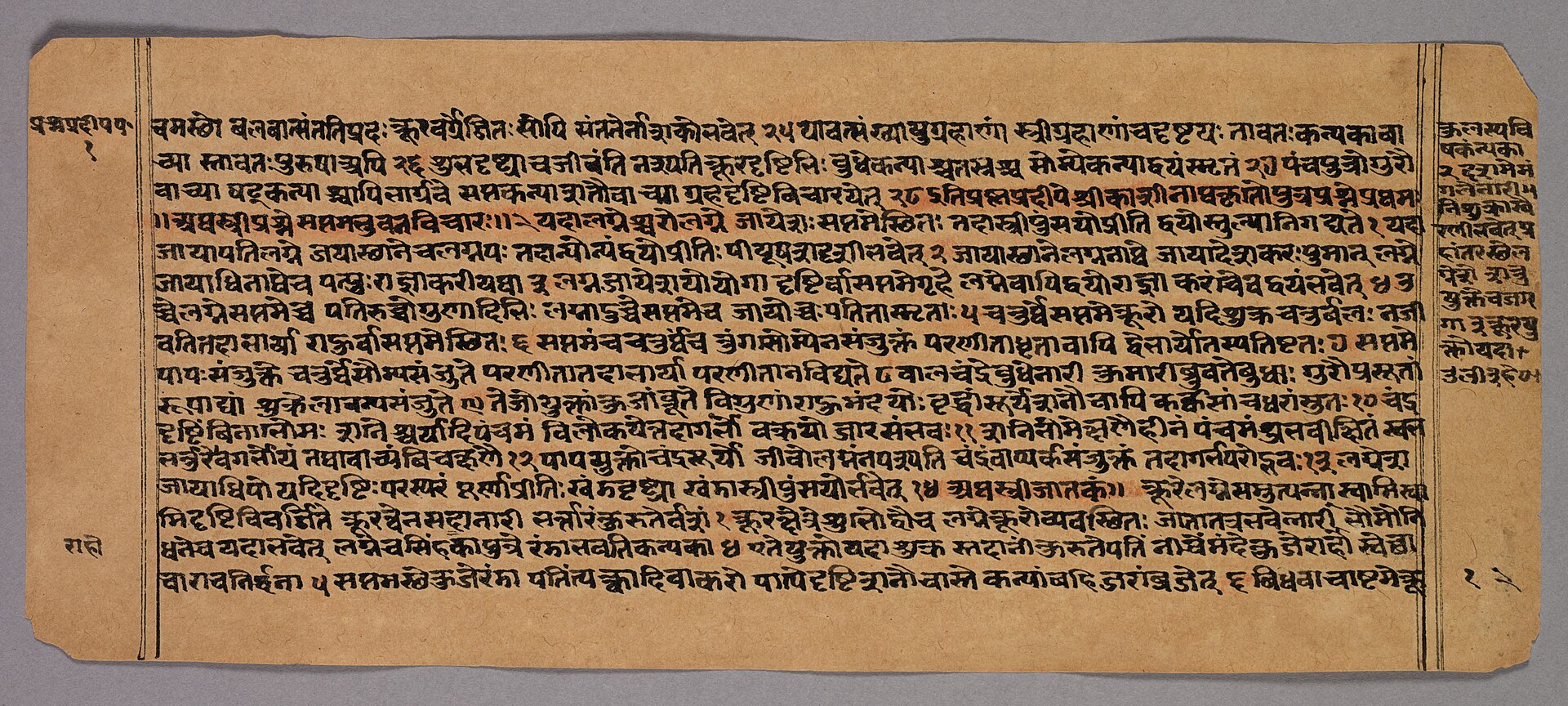
You have probably heard the word kundli at a family gathering, in a matrimonial conversation, or scrolling through an astrology app — and wondered what that diamond-shaped diagram actually means. A kundli is simply a map of the sky at the exact moment you were born, interpreted through the lens of Jyotisha, the ancient Vedic tradition of astrology. Once you understand its basic building blocks, what looks like a cryptic grid starts to feel like a surprisingly personal story.
What Is a Kundli?
The word kundli (also spelled kundali or janam kundali) comes from the Sanskrit root meaning "coiled" — a reference to the cyclical nature of time and karma that Vedic astrology explores. In practical terms, it is a chart divided into twelve sections, each representing a different area of life, with the nine classical planets (grahas) placed in them according to their positions at your birth.
To cast a kundli you need three things: your date of birth, time of birth, and place of birth. The time and place together determine which part of the zodiac was rising on the eastern horizon — and that point becomes the cornerstone of your entire chart.
Talk to an astrologer about your birth chart. First message free · ₹25/min
The Ascendant — Your Lagna
The Lagna is the single most important point in a Vedic birth chart. It marks the zodiac sign that was rising on the eastern horizon at the moment of your birth, and it becomes the "first house" from which all other houses are counted.
Think of the Lagna as the lens through which you experience the world — your physical constitution, the way others perceive you at first meeting, and your overall approach to life. Two people born on the same day but a few hours apart can have completely different Lagnas and therefore very different charts.
"The Lagna is not who you are destined to be — in astrological tradition, it describes the vehicle through which your soul is navigating this lifetime."
The 12 Houses (Bhavas)
Each of the twelve sections of the kundli is called a bhava (house), and each broadly governs a domain of lived experience. In Vedic astrology the houses are counted from the Lagna, so the sign of your Lagna occupies the first house, the next sign occupies the second, and so on.
Here is a compact overview of what each house broadly signifies in astrological tradition:
- 1st House (Lagna) — Self, body, personality, overall vitality
- 2nd House — Wealth, family, speech, accumulated resources
- 3rd House — Siblings, communication, short journeys, courage
- 4th House — Home, mother, inner happiness, land and property
- 5th House — Children, creativity, education, romance, past-life merit
- 6th House — Health challenges, service, enemies, daily routines
- 7th House — Marriage, partnerships, business alliances
- 8th House — Transformation, longevity, hidden matters, inheritance
- 9th House — Dharma, father, higher learning, long journeys, luck
- 10th House — Career, public life, reputation, authority
- 11th House — Gains, elder siblings, social networks, aspirations
- 12th House — Losses, liberation, foreign lands, spiritual retreat
No house is "good" or "bad" in isolation — context, the planets placed there, and the sign occupying that house all shape the picture. Many astrologers treat the 6th, 8th, and 12th houses as challenging, but they also carry deep meaning around growth through adversity and spiritual progress.
The Nine Grahas (Planets)
Vedic astrology works with nine grahas — a word often translated as "planets" but more precisely meaning "seizers" or forces that exert influence. They are:
- Surya (Sun) — Soul, father, authority, vitality
- Chandra (Moon) — Mind, emotions, mother, instinct
- Mangal (Mars) — Energy, ambition, courage, conflict
- Budha (Mercury) — Intellect, communication, trade
- Guru (Jupiter) — Wisdom, expansion, children, grace
- Shukra (Venus) — Love, beauty, pleasure, refinement
- Shani (Saturn) — Discipline, karma, delay, endurance
- Rahu — The north lunar node; worldly desire, ambition, foreign influence
- Ketu — The south lunar node; spirituality, past-life patterns, detachment
Rahu and Ketu are not physical bodies — they are the two mathematical points where the Moon's orbit crosses the Sun's apparent path. In astrological tradition they are treated as shadow planets with a powerful effect on how karma plays out over a lifetime.
Each graha is considered strong or weak depending on the sign it occupies, the house it sits in, and its relationships with other planets in the chart.
Rashi vs. Lagna — Moon Sign vs. Ascendant
A common source of confusion: in Western astrology most people identify with their Sun sign. In Vedic astrology two signs matter far more — your Lagna (ascendant) and your Rashi.
Your rashi is your Moon sign — the zodiac sign the Moon occupied at your birth. In Vedic tradition the Moon represents the mind, and many astrologers consider the Rashi as important as, or even more personal than, the Lagna. Your daily horoscope in Indian newspapers is almost always based on your Rashi, not your Sun sign.
If you are unsure of your Rashi or Lagna, generate your free kundli — both will appear immediately in your chart.
Nakshatras — The 27 Lunar Mansions
Vedic astrology divides the zodiac into 27 (sometimes 28) nakshatras, or lunar mansions — each spanning 13°20' of arc. Where the Moon falls in your chart determines your janma nakshatra, your birth star.
Nakshatras add a layer of nuance that the twelve rashis alone cannot provide. Two people born with the Moon in Aries may have very different temperaments depending on whether the Moon falls in Ashwini, Bharani, or the first degree of Krittika. You can explore the full range of birth stars in the nakshatra index.
Dashas — Planetary Time Periods
Perhaps the most practically useful system in Vedic astrology is the dasha system — a sequence of planetary time periods that describes which graha is "active" in your life at any given time.
The most common system is the Vimshottari dasha, a cycle of 120 years divided among the nine grahas. At birth, you enter a dasha period determined by the nakshatra of your natal Moon, and each subsequent period can last between 6 and 20 years.
When astrologers say "you are in your Saturn dasha", they mean Saturn is the dominant theme of this chapter — not that doom is approaching, but that Saturn's qualities (discipline, slow results, restructuring) are likely front and centre. Understanding your current dasha can reframe periods that feel stagnant or unusually expansive.
How to Start Reading Your Own Chart
The honest truth about kundli reading is that it is a craft that takes years to develop, and even seasoned astrologers approach a chart with humility rather than certainty. A computer-generated chart accurately shows planetary positions — but interpretation is where human skill, intuition, and contextual understanding come in. Our AI-assisted readings on this platform are a helpful starting point, and we are transparent that they draw on algorithmic pattern-matching rather than the lived wisdom of a practising astrologer.
That said, here is a practical sequence for a beginner:
- Find your Lagna. This is your chart's anchor. Look up what that sign values, fears, and gravitates toward.
- Find your Moon sign (Rashi). Reflect on whether its described emotional style resonates with how you actually feel from the inside.
- Notice which houses are occupied. Houses with multiple planets tend to be busy, highlighted areas of life.
- Identify your strongest planet. Jupiter and Venus in their own or exalted signs are generally considered supportive influences; a debilitated planet in a key house may point to challenges worth understanding.
- Check your current dasha. Knowing the planetary period you are in adds a time dimension that a static chart cannot give you alone.
- Go slowly. Kundli reading is not a checklist — it is a dialogue between the chart, your lived experience, and an honest reflective process.
If you are exploring compatibility between two charts, kundli matching compares Lagna, Rashi, and nakshatra alignment in the traditional Ashtakoot system — useful as one input among many when considering a long-term relationship.
Where to Go from Here
Your birth chart is not a verdict. In the Vedic tradition, Jyotisha is meant to illuminate — to give you language for patterns you may already sense, and to point toward practices that support your growth. Whether you use it as a reflective journal prompt or a serious spiritual tool, the kundli repays curiosity.
Ready to see yours? View your free birth chart at /kundli — all you need is your date, time, and place of birth. And when you want a richer conversation about what it all means, our experienced astrologers are available for personal readings by chat or call. Interpretation is where the real journey begins.
Images: Ms Sarah Welch (CC BY-SA 4.0) via Wikimedia Commons.
Frequently Asked Questions
What is a Kundli?
A Kundli (janam kundali or birth chart) is a snapshot of the sky at your exact moment of birth — the positions of the Sun, Moon, planets and the twelve houses, drawn from your date, time and place of birth. It is the foundation of every Vedic astrology reading.
How do I read my Kundli myself?
Start with your Lagna (ascendant) — the sign rising in the 1st house — then note the sign and house of each planet, your Moon sign and Nakshatra, and your running Vimshottari dasha. Read houses by theme (7th = marriage, 10th = career). Generate your free chart with our kundli tool.
What details do I need to make my Kundli?
Your date of birth, exact time of birth, and place of birth. The birth time is the most important — it sets your Lagna and the house positions, which shift roughly every two hours.
What is the difference between Rashi and Lagna?
Rashi usually means your Moon sign, which drives most Vedic predictions and your daily horoscope. Lagna is your ascendant — the sign rising at birth — which anchors the houses. Many readings weigh both together.
Can I read my Kundli without knowing my birth time?
You can get a Moon-sign and planet-based reading without an exact time, but the houses, Lagna and precise event timing need a birth time. If it is unknown, a good astrologer works with what is available and flags the limitation honestly.
 Astrologger