What Manglik Dosha in the 8th House Actually Means
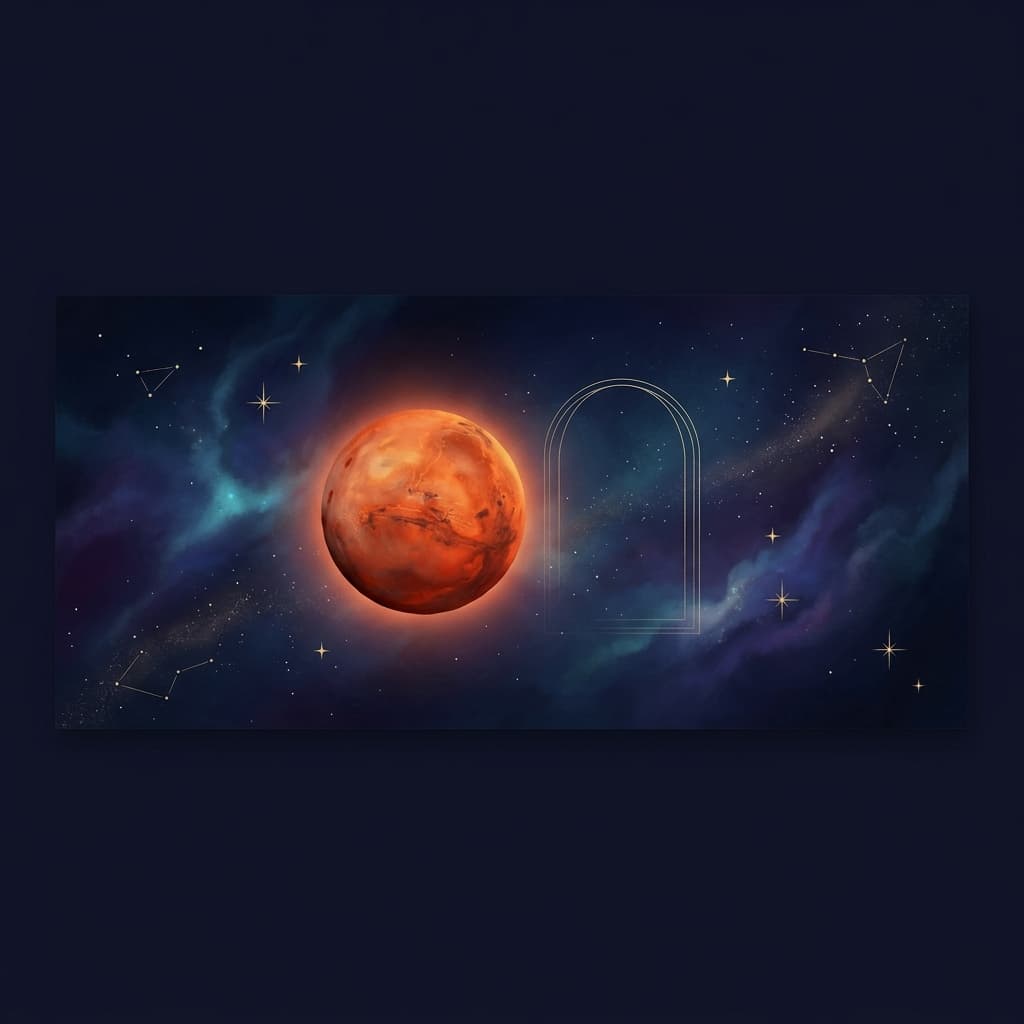
Few combinations in Vedic astrology evoke as much immediate anxiety as Manglik Dosha, particularly when associated with the eighth house. In Jyotish tradition, this condition (also known as Kuja Dosha or Mangal Dosha) forms when Mars occupies the 1st, 2nd, 4th, 7th, 8th, or 12th house of a birth chart, though classical texts and regional lineages vary on the exact list. Because the Sanskrit word mangala translates to auspicious, its association with a fiery, disruptive influence creates a notable irony: Mars supplies vital courage, drive, and initiative, yet when placed in relationship-oriented houses, classical commentators observe that it can introduce friction or friction-filled dynamics into domestic life.
Popular folklore often treats the eighth house (Ayur Bhava) as a domain of inevitable catastrophe, but classical authorities offer a far more nuanced picture. Rather than signaling sudden calamity, the eighth house governs transformation, longevity, shared financial resources, inheritance, and psychological depth. When dynamic Mars resides here, marital challenges frequently center on practical, human themes—such as setting boundaries with in-laws, cultivating emotional transparency, or managing joint assets—rather than foreordained misfortune.
A single placement never operates in isolation. Classical interpretation requires examining the full kundli to assess whether Mars acts as a functional friend or malefic, whether benefic aspects from Jupiter soften its heat, or if supportive placements in the Navamsa chart alter the pattern. Traditional Jyotish describes these planetary positions as behavioral tendencies and developmental invitations, never fixed destinations.
Ask an AI astrologer about your Manglik dosha. First 3 minutes free (once per account), then ₹10/min.
How Mars in the 8th House Impacts Marriage and Longevity
Vedic astrology classically connects Manglik Dosha (or Kuja Dosha) with placements where Mars occupies specific houses, including the 8th house (Randhra Bhava). Historical texts traditionally associate this position with sudden disruptions, physical vulnerability, or marital discord. Stripped of sensationalism, modern Jyotish commentary reads these associations not as inevitable fate, but as intense emotional and relational patterns.
The 8th house governs shared resources, intimacy, vulnerability, and in-law relationships. When Mars places its fiery, assertive energy here, marital strain often surfaces as friction over joint finances or unspoken boundary struggles with extended family. Mars also casts special aspects (drishti): its 7th aspect onto the 2nd house of speech (kutumba) can introduce sharp, reactive communication at home, while its 4th aspect on the 11th house and 8th aspect on the 3rd house can trigger friction regarding personal ambitions or social circles.
Rather than indicating physical doom, classical longevity readings reflect psychological endurance and emotional volatility under pressure. Whether in a male or female kundli, the real-world manifestation depends heavily on the ascendant (lagna). For an Aries or Sagittarius ascendant, Mars acts as a functional benefic, often channelling this placement into resilience and protective instincts. Conversely, for Gemini or Virgo ascendants, it acts as a functional malefic, where unaddressed anger or defensiveness may strain marital stability. Astrologers also evaluate the Navamsa (D9) chart to see if these tensions soften or concentrate, reminding us that no single placement dictates the course of a partnership.
The Drishti Mechanics: How 8th-House Mars Influences Surrounding Houses
Planetary sight (drishti) explains why an 8th-house Mars (Mangal) reaches far beyond its immediate placement in Vedic astrology. Classical texts grant Mars special full aspects on the 4th and 8th houses from itself, alongside its standard 7th aspect. When stationed in the 8th house, this fiery influence directly projects onto the 11th, 2nd, and 3rd houses.
Its 4th aspect falls on the 11th house of social networks, elder siblings, and incoming gains. This energy can introduce sudden friction or competitive strain into long-term friendships. Mars does not simply dissolve social circles, but it can make collaborative efforts feel impatient, leading to misunderstandings over shared goals.
Opposite the 8th sits the 2nd house of speech, accumulated wealth, and extended family (kutumba), receiving Mars's direct 7th aspect. This is often where everyday tensions become visible. The assertive impulse of Mars projected onto speech tends to produce sharp words, blunt reactions, or unsolicited candour during family discussions. While folklore might label financial or domestic friction as sheer bad luck, the classical mechanism frequently points to conversational temperament. Words spoken with sudden heat or without tact can easily injure sensitive relationships.
Finally, the 8th aspect lands on the 3rd house of personal initiative, siblings, and courage. This dynamic often heightens mental restlessness. It may prompt impulsive decisions, reckless driving, or an urge to act before fully weighing the consequences. When evaluating your birth chart at /kundli, understanding these sightlines reframes the placement. Rather than an unavoidable omen, 8th-house Mars reflects a distinct pattern of fiery communication and restless impulse that asks for mindful patience.
Why Ascendant Sign Determines Whether 8th-House Mars Helps or Hurts
Assessing Mangal Dosha through a broad, one-size-fits-all label often obscures how the planet actually behaves in Vedic astrology. The eighth house is traditionally a dusthana (a challenging house associated with sudden change, longevity, and joint assets), yet Mars takes on a different functional character for every lagna (ascendant sign).
When Mars rules supportive houses, its eighth-house placement tends to operate with constructive purpose. For an Aries ascendant, Mars serves as the lagnesha (ascendant lord). Even while occupying Scorpio in the eighth house, it resides in its own sign, which classical texts associate with endurance, research ability, and personal resilience rather than sheer disruption. Similarly, for a Sagittarius ascendant, Mars governs the auspicious fifth house of intellect and the twelfth house. Because it acts as a functional benefic, its presence here can channel deep psychological insight and shared resources, softening the disruptive potential often feared in standard interpretations.
Conversely, when Mars governs difficult houses, its eighth-house energy can express more abrasively. For Gemini or Virgo ascendants, Mercury rules the chart, and Mars becomes an arch-rival and functional malefic. For a Gemini lagna, Mars lords over the sixth house of conflict and eleventh house of desires; in the eighth, this combination may manifest as volatile discussions over joint finances, sudden friction with in-laws, or sharp speech directed toward family.
Evaluating the planetary ruler of your ascendant in your kundli reveals whether eighth-house Mars acts as an ally carrying necessary grit, or an uncomfortable influence requiring careful emotional boundaries.
Navamsa (D9) Verification: Evaluating Dosha Strength Beyond the Rashi Chart
Reading an 8th-house Mars solely through the primary birth chart (Rashi or D1) offers only an incomplete view in Jyotish tradition. Before assessing the true weight of mars in 8th house manglik dosha, seasoned practitioners turn to the Navamsa (D9 chart) — the divisional chart mapping the deeper potential of partnerships and the second half of life. A placement that looks challenging in the birth chart can undergo significant refinement when examined in this subtle layer.
To evaluate whether the dosha's intensity softens or compounds, classical analysis follows clear assessment protocols:
- Dignity and Sign Placement: Look at the sign Mars occupies in the D9. If Mars moves into its exaltation sign (Capricorn) or its own signs (Aries or Scorpio), it gains essential strength (dignity). Rather than multiplying friction, an exalted or well-placed D9 Mars traditionally reflects healthy boundaries, resilience, and personal discipline. Conversely, entering its debilitation sign (Cancer) or an enemy's domain can indicate unexpressed frustration or emotional volatility that asks for conscious attention.
- Benefic Association: Conjunctions or aspects from natural benefics — particularly Jupiter (Guru) or Venus (Shukra) — in the Navamsa tend to temper the fiery nature of Mars. Classical commentary views Jupiter's influence as especially softening, frequently operating as a balancing factor against raw discord.
- Planetary Friendships: Mars settling into friendly signs (such as those ruled by the Sun, Moon, or Jupiter) tends to foster constructive expression, while placement alongside natural malefics like Saturn or Rahu can suggest areas where patience requires intentional practice.
Examining your kundli with this layered perspective helps move beyond simple labels, revealing how planetary energies lean toward constructive growth over time.
Cancellation Rules for Manglik Dosha in the 8th House
When Mars occupies the eighth house, popular apprehension often runs high, yet classical Jyotish provides numerous cancellation principles (bhanga) that modify its influence. Astrologers regularly find that a significant proportion of charts meet established criteria for mangal dosha cancellation in 8th house placements, softening or rechanneling the fiery relationship dynamics traditionally feared.
Classical authorities state that Mars in its own signs of Aries (Mesha) or Scorpio (Vrishchika), or its exaltation sign of Capricorn (Makara), functions with greater constructive dignity. In such positions, the planet tends to direct its courage toward psychological endurance and shared crisis management rather than discord. Natural benefics like Jupiter (Guru) or Venus (Shukra) also temper the rough edges of eighth-house Mars through their supportive aspects (drishti). A supportive Jupiterian aspect, in particular, can foster wisdom, transparency in marital finances, and greater patience within family communication.
Ascendant-specific functional nature also alters this placement. For an Aries or Sagittarius ascendant (lagna), Mars acts as an auspicious functional benefic, mitigating distress that functional malefics might otherwise produce. Synastry offers another primary cancellation: when a partner carries an equivalent Mars placement, the relationship often develops an energetic equilibrium where neither partner overpowers the other.
A prudent astrologer also checks the Navamsa (D9) chart. A difficult placement in the primary birth chart (Rashi) may be neutralized if Mars gains dignified placement or benefic association in the D9. To review your full chart dynamics, you can generate your kundli and read the patterns with balanced perspective.
Why Wearing Red Coral for 8th-House Mars Can Backfire
A common misconception in popular gemstone prescribing is that a troubled planet simply needs strengthening. When addressing Mars in 8th house manglik dosha, the immediate impulse is sometimes to reach for Red Coral (Moonga). In classical Jyotish, however, gemstones do not pacify a planet. They act like energetic amplifiers, intensifying whatever role that graha plays in the natal framework.
The eighth house is a dusthana—a challenging house traditionally linked with sudden upheavals, hidden vulnerabilities, and joint finances. Enhancing Mars while it sits here can inadvertently magnify its harsher tendencies rather than soothe them. When Mars carries functional malefic lordship—such as for Gemini (Mithuna) or Virgo (Kanya) ascendants—amplifying its energy with Red Coral tends to heighten irritability, sharp speech toward family, and friction with a partner. Even its physical associations, like inflammation or susceptibility to cuts and fevers, may experience heightened sensitivity.
Before anyone considers wearing a gemstone for Mars, a careful analysis of functional lordship across the whole kundli is essential. For ascendants where Mars acts as an auspicious ruler—such as Aries (Mesha) or Sagittarius (Dhanu)—the dynamic shifts, yet its eighth-house placement still demands caution. Checking the Navamsa (D9 chart) helps clarify whether this martial energy softens or intensifies beneath the surface. Rather than viewing stones as universal fixes, classical astrology suggests honouring these placements with patient self-awareness, clear communication, and emotional grounding.
Constructive Remedies and Psychological Adjustments
Traditional Jyotish views Mars in the eighth house through the lens of intensity, transformation, and shared resources. When exploring mangal dosha in 8th house remedies, Vedic thought moves away from fear and offers spiritual practices aimed at calming raw martial energy, while modern relationship dynamics benefit from grounded psychological awareness.
Within the tradition, devotional practices directed toward Mars (Mangal) or Lord Hanuman, Mars's devoted protector, are frequently recommended. Chanting the Mangal Beej Mantra or reciting the Hanuman Chalisa offers a contemplative rhythm that practitioners find helpful for cultivating patience. In certain communities, classical texts describe symbolic pre-marital rituals, such as a symbolic union with a tree or deity, meant to symbolically absorb disruption before marital commitments begin. A common misunderstanding involves gemstones: prescribing a Red Coral (Moonga) without thoroughly evaluating house lordship can inadvertently heighten irritability, particularly when Mars rules sensitive houses. Analysing the birth chart on a kundli assessment helps clarify these functional nuances before considering any physical token.
Beyond symbolic traditions, the eighth house governs joint finances, vulnerability, and intimacy with in-laws. Because Mars casts its aspects toward speech and shared assets, couples often benefit from deliberate, transparent financial habits. Open conversations about debts, expectations, and family boundaries reduce the friction that an unmonitored fiery impulse can introduce. Learning to pause before reacting during disagreements transforms an otherwise sharp, protective instinct into steady emotional honesty, turning challenging chart tendencies into shared resilience.
Frequently Asked Questions
Is 8th house Manglik Dosha more severe than 7th house Manglik Dosha?
Classical Jyotish texts often treat the 8th house placement with particular caution because it governs longevity, marital endurance, and shared resources, whereas the 7th house relates directly to day-to-day partnership friction. However, one is not inherently more severe than the other in modern practice, as chart context matters immensely. Benefic influences, such as supportive aspects from Jupiter, along with established cancellation conditions, can significantly soften the placement's intensity in either house.
Does Manglik Dosha in the 8th house cut marital longevity short?
No, a placement of Mars in the 8th house does not mean a marriage is destined to end prematurely. While classical texts traditionally associate this placement with sudden disruptions or challenges surrounding longevity, contemporary astrologers emphasise that a single planetary position never dictates life outcomes. The overall strength of the birth chart, supportive planetary aspects, and conscious partnership dynamics play a far greater role in relationship durability.
How does 8th house Mangal Dosha affect a female chart specifically?
In classical Jyotish tradition, the 8th house in a female chart was linked to the concept of mangalya (marital longevity and domestic harmony), meaning Mars here was historically interpreted with extra apprehension. In contemporary practice, this placement tends to indicate a strong-willed personality, deep emotional intensity, and a need for transparency around joint finances and family boundaries. When met with self-awareness and mutual respect, this fiery Martian energy can become a source of personal resilience rather than relationship friction.
Can two people marry if only one partner has 8th house Mangal Dosha?
Yes, two people can marry even if only one partner carries 8th house Manglik Dosha. While traditional custom often suggests pairing two Manglik charts to balance the assertive Martian energy, astrologers also evaluate overall compatibility, benefic planetary aspects, and cancellation rules across the full chart. Many couples with differing Manglik status build deeply fulfilling, lasting partnerships through patience, maturity, and honest communication.
What practical lifestyle habits help balance 8th house Mars energy?
Channelling Mars's natural drive into disciplined physical activity, such as regular exercise, yoga, or strength training, offers a constructive outlet for pent-up intensity. Practising open, calm communication regarding shared finances and sensitive emotional topics helps navigate the transformative themes linked to the 8th house. Additionally, mindfulness routines and breathwork can support emotional regulation, helping turn reactive impulses into steady, courageous focus.
Is Manglik Dosha in the 8th house always considered harmful?
No single dosha placement is purely harmful on its own. Classical Jyotish treats 8th-house Mars as a placement worth closer analysis because the 8th house governs longevity, transformation, and shared resources, so this Mars position is traditionally read as intense rather than simply bad. Whether it feels disruptive or energising in a specific chart depends on Mars's overall strength, supportive aspects from benefics such as Jupiter, and whether recognised cancellation conditions apply.
Can Mars in the 8th house really point to sudden death or a serious health risk?
Classical texts do discuss the 8th house in relation to longevity and sudden change, which is part of why this placement has a reputation for intensity, but contemporary astrologers read it as a symbolic indicator of transformation and stress, not as a literal prediction of danger, illness, or death. A single planetary placement cannot determine a person's lifespan, and genuine health concerns should always be discussed with a qualified medical professional rather than a horoscope.
 Astrologger